
Emergency Roof Tarping in The Woodlands, TX
When a storm or a falling limb opens up your roof, a properly secured tarp keeps the next rain out of your home until the permanent repair is done.
Check if your town is in our service area →
- Free, no-obligation estimates
- Local contractor since 1997
- Photos of every problem found
When a Roof Needs a Tarp
A tarp is the right first step whenever water can get into the house before a permanent repair can be made. In The Woodlands that usually means one of three things: a pine or oak limb has punched through the shingles or decking, high winds have torn off a section of shingles and exposed the underlayment, or an active leak is soaking the attic during a stretch of rainy weather.
Tarping is temporary. It does not fix the roof, and it does not replace damaged shingles, underlayment or decking. What it does is stop more water from reaching insulation, drywall and framing, which is where most of the cost of storm damage comes from when a roof is left open.
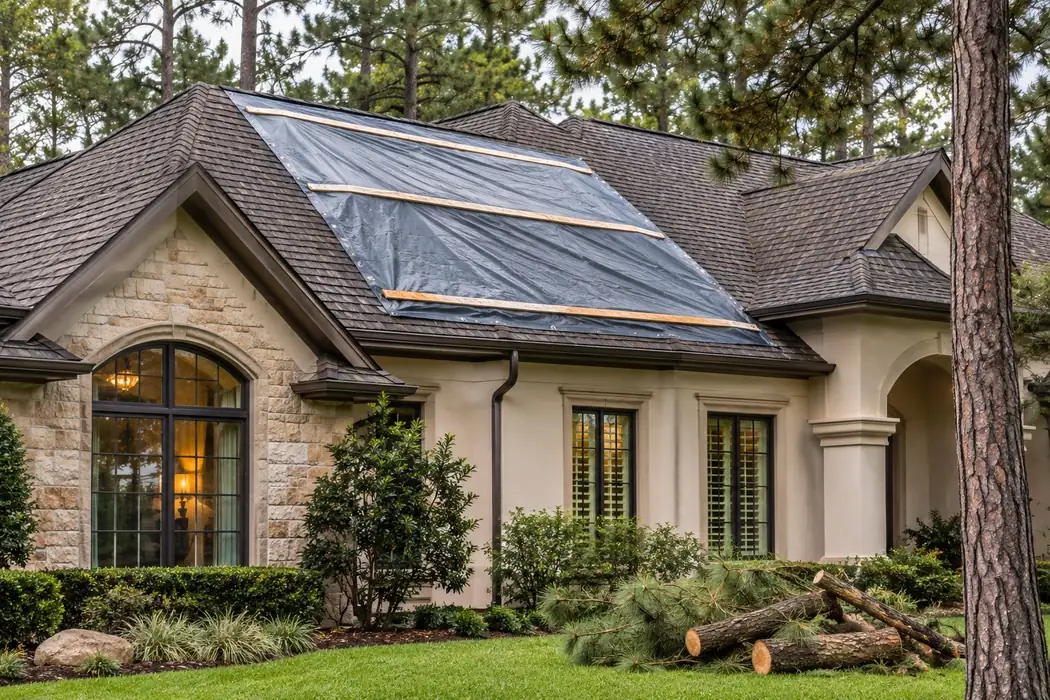
How Emergency Tarping Works
A tarp that is just weighed down with bricks or tied to a gutter usually blows loose in the next storm. A properly installed tarp runs up and over the ridge where possible and is secured along its edges so wind cannot get underneath it.
- Safety check first
The roofer looks for loose limbs, sagging decking and downed lines before anyone goes on the roof. - Measure the damage
The tarp is sized to extend well past the damaged area so water cannot run under its edges. - Clear loose debris
Branches, loose shingles and debris are cleared where it is safe to do so. - Secure the tarp
The tarp is fastened so it sheds water and resists wind lifting, billowing and edge leaks. - Plan the permanent repair
You get photos of the damage and a written scope for the permanent repair.
What Emergency Tarping Costs
Most emergency tarping jobs fall between $300 and $1,200 or more. Steep or tall roofs, large damaged areas and work during active storm conditions push the price toward the top of that range. Many homeowners policies cover reasonable steps taken to prevent further damage after a covered storm, but coverage depends on your policy, so keep the receipt and the photos. Your insurance company decides what is covered.
After a federally declared disaster, the U.S. Army Corps of Engineers runs Operation Blue Roof on behalf of FEMA, which installs free temporary roof coverings for eligible primary residences. It only operates in declared disaster areas, so most storms in The Woodlands are handled by private tarping.
| Situation | Typical range |
|---|---|
| Emergency roof tarping (most jobs) | $300–$1,200+ |
| Federal Operation Blue Roof (declared disasters only) | Free to eligible homeowners |
The tarping range is the contractor's published typical range, not a quote. Roof height, pitch, the size of the damaged area and storm conditions all affect the price.
What to Do Before the Roofer Arrives
- Stay off the roof. Wet, damaged roofs are slippery, and storm-damaged decking can give way.
- Take photos of the damage from the ground and of any water coming in inside.
- Catch the water with buckets and towels, and move electronics and valuables out of the way.
- Turn off power to wet areas if water is near light fixtures or outlets.
- Keep receipts for anything you buy or pay for to protect the home.
Why Trees Make Tarping Common Here
The Woodlands was built inside a pine and hardwood forest, and many homes have tall trees within reach of the roof. Spring thunderstorms and the occasional tropical system bring wind strong enough to drop limbs onto roofs, and a limb strike is the most common reason for an emergency tarp in the area. Trimming branches back from the roofline is the best way to lower the risk, and the roofer can point out limbs that look like a problem while they are on site.
From Tarp to Permanent Repair
A tarp is meant to buy time, not to stay on for months. Sun breaks tarps down, and wind works fasteners loose. Once the home is protected, the next step is a full inspection of the damaged area, followed by a written repair scope and price. In most cases the permanent repair can be scheduled as soon as the weather allows. If the damage is widespread, the photos will show whether a larger repair or a replacement makes more sense.
Emergency Roof Tarping Across the Area
We take emergency roof tarping calls from homeowners in every community below.
Emergency Roof Tarping Questions
How fast can a tarp be installed?
Call and say that water is coming in or the roof is open. Emergency requests are treated as urgent, and timing depends on weather and how many homes were hit by the same storm.
Is it safe to tarp my own roof?
It is not recommended. Wet, storm-damaged roofs are slippery and decking may be weakened. A tarp that is not secured properly also tends to blow off in the next storm.
Does insurance pay for emergency tarping?
Many policies cover reasonable steps to prevent further damage after a covered storm, but it depends on your policy. Keep the receipt and photos. Your insurance company decides coverage.
How long can a tarp stay on my roof?
A tarp is a short-term fix. Sun and wind wear it down, so the permanent repair should be scheduled as soon as the weather allows.
What is Operation Blue Roof?
A free federal program run by the U.S. Army Corps of Engineers for FEMA that installs temporary roof coverings for eligible homeowners after a declared disaster.
Get a Free Estimate
Tell us what you're seeing. A local roofer will inspect it, show you photos, and give you a written price before any work starts.